Hole/Edge Sealing/V Guide/Sidewall Cleat Machine
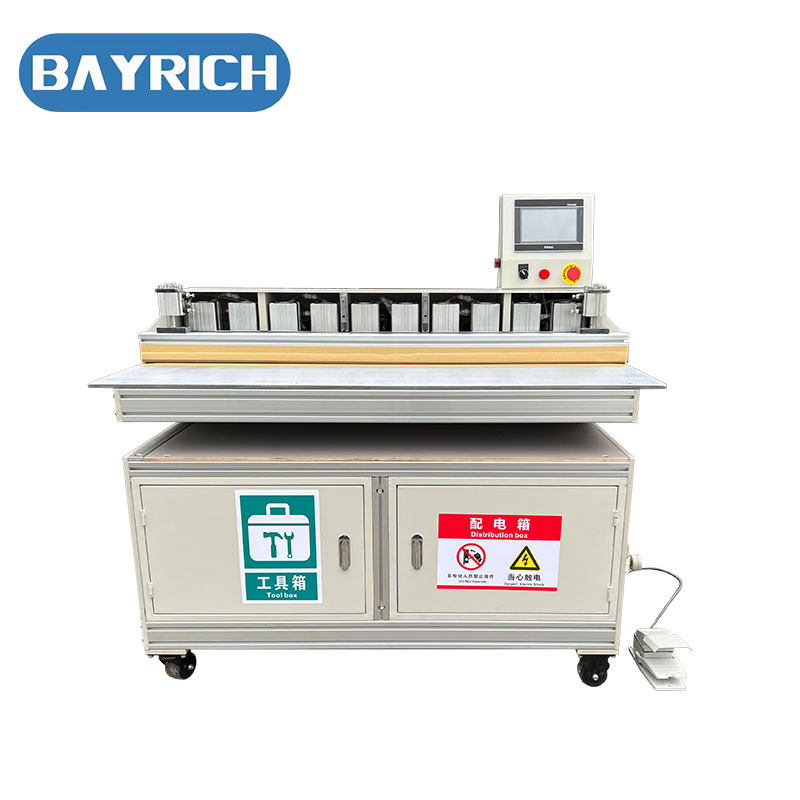
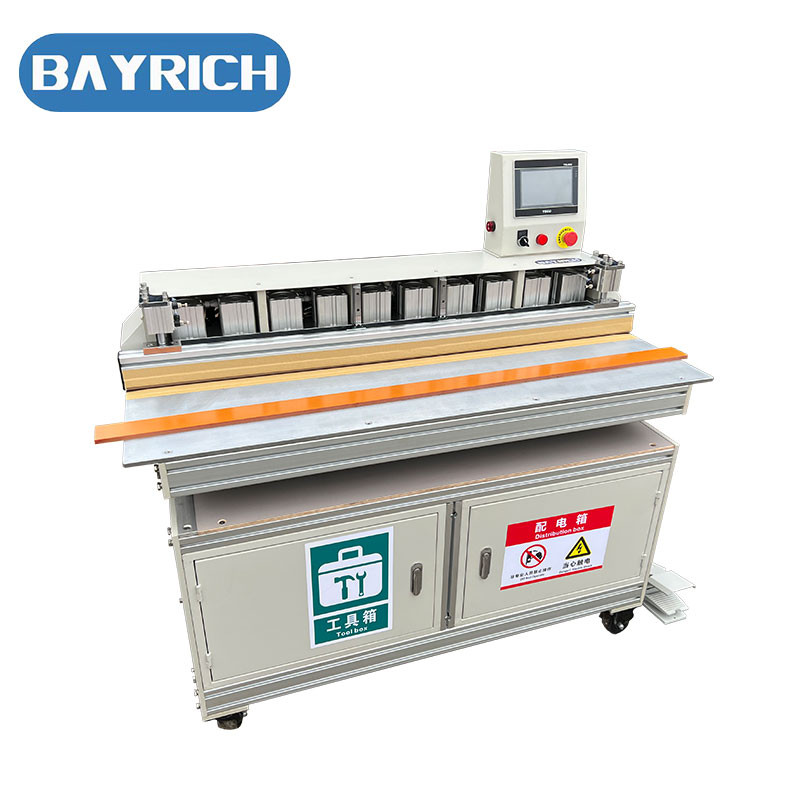
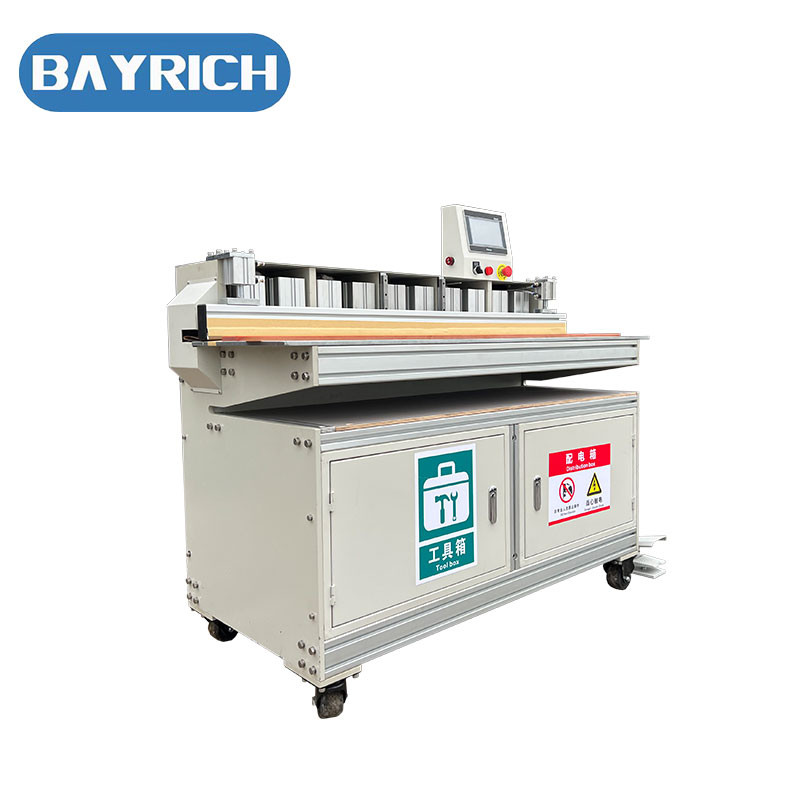
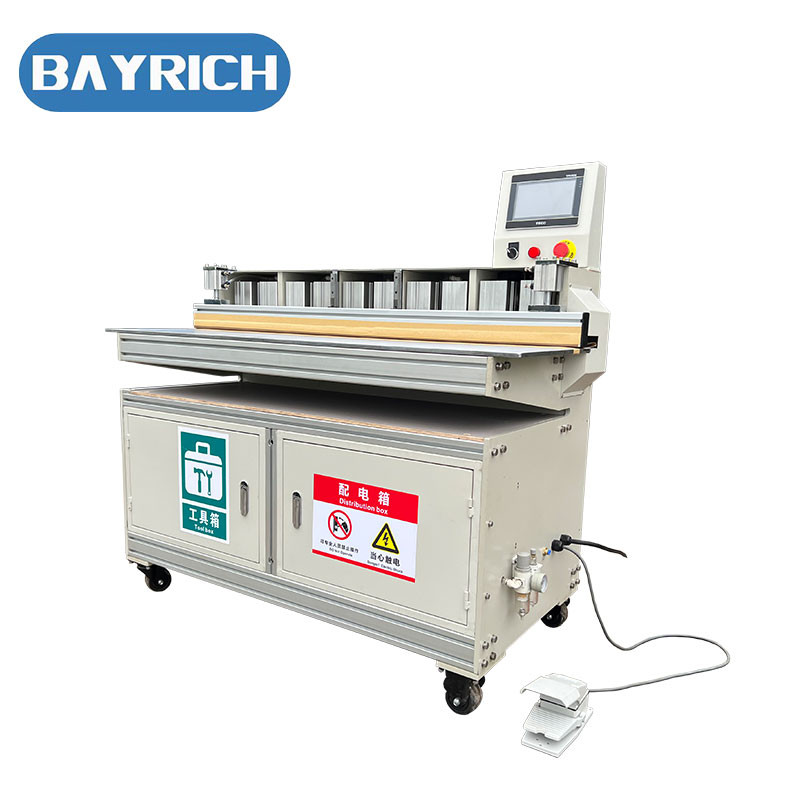
Conveyor Belt Edge Sealing Machine
Bayrich Conveyor belt edge sealing Machine is an edge sealing machine for coated conveyor belting.
Conveyor & Industrial Belt Fabrication Equipment
Belt Edge Sealing Machine
ES1500 · heat and pressure · no edge strip · no edge preparation
Effective sealing length 1500 mm | 1700 × 850 × 1150 mm | 1 PH 220 V · 5 kW | 700 kg
▎Product Overview
| An edge sealing machine for coated conveyor belting. Where a belt is cut, the fabric plies at the edge are left open and act as a wick: liquids, dust and microorganisms are drawn into the carcass and the plies begin to separate from the edge inward. ES1500 clamps the edge in a heated platen, melts the belt’s own material and closes the edge under pressure, then cools it with forced air — no edge strip, no adhesive, no edge preparation. ● No edge strip — the belt seals itself, so there is no strip to buy, store or colour-match. ● No edge preparation — seal straight after cutting; no skiving, no priming, no cleaning down. ● Single-ply too — even thin one-ply belting can be sealed. ● Stays soft — the sealed edge remains flexible, so it still tracks and bends normally. Clamp, heat, cool — pneumatic clamping, heated platen, forced-air cooling, foot-pedal control. |
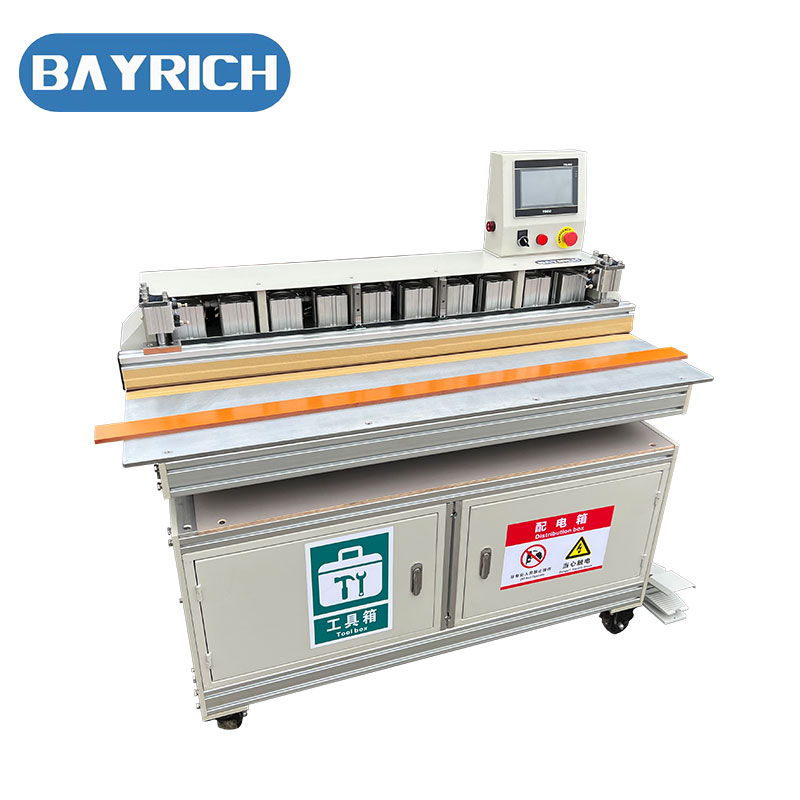
▎Technical Specifications
Item | Specification | Item | Specification |
Model | ES1500 | Effective sealing length | 1500 mm |
Machine size | 1700 × 850 × 1150 mm | Voltage | 1 PH 220 V |
Power | 5 kW | Weight | 700 kg |
Sealing method | Heated platen, air clamp | Edge preparation | None required |
Sealing material | None, self-sealing | Cooling | Forced-air cooling fan |
Clamping | Air cylinder | Control | Panel control + foot pedal |
Air supply | Plant air required | Mobility | Castors, mobile on site |
▎Key Features
● No extra material—the edge seals itself, no strip or adhesive | ● No preparation—seal straight off the cutter |
● Single-ply too—thin belting seals as well as thick | ● Stays soft—no stiff rim, normal tracking and bending |
● Full 1500 mm—clamp, heat and cool along the whole length | ● Easy to learn—foot pedal and panel, one operator |
▎Applications
● Food & beverage—keeps liquids, dust and microorganisms out of the carcass | ● Confectionery & drinks—edge stays sealed through sticky product and washdown |
● Electronics—stops edge dust and fibre shedding onto the product | ● General—less belt damage, less clean-up, longer belt life |
▎Operating Procedure
① Place: belt edge on the worktop, inside the heating zone | ② Clamp: lower the platen with the air cylinder, set pressure on the gauge |
③ Heat: set temperature on the panel, hold for the set time | ④ Cool: release the platen, cool the edge with the fan until firm |
⑤ Advance: move the belt on one working length, repeat | ⑥ Inspect: edge closed and flexible, no scorch marks or ripple |
Tip: connect the air supply and check the gauge before the first cycle; let the edge cool completely before the belt goes back on the machine, or the seal will pull open under tension; keep the platen clean — residue from one belt will mark the next.
Specifications are for the standard configuration; the confirmation drawing and the delivered unit prevail. Sealing results vary with belt compound, thickness and condition — trial a sample before production.
Belt Edge Sealing Machine
Frequently Asked Questions
ES1500 · hot-press edge sealing · no edge strip · no edge preparation
Q1 What is a conveyor belt edge sealing machine?
A conveyor belt edge sealing machine closes the cut edge of a coated fabric belt so the carcass is no longer exposed. A cut edge is the weakest point on a belt: the fabric plies are open, so liquids, dust and microorganisms are drawn into the belt body and the plies begin to separate from the edge inward. Sealing closes that edge into a solid, flexible rim.
Q2 Why should I seal the edge of a conveyor belt?
To keep contamination out of the carcass. In food, confectionery and beverage lines, an open edge absorbs product, washdown water and cleaning chemicals, and becomes a place where microorganisms can grow. In electronics, a cut edge sheds fibre and dust onto the product. A sealed edge also protects the belt itself, so it lasts longer and the line needs less cleaning.
Q3 How does the ES1500 seal an edge without using an edge strip?
It melts the belt’s own material. The edge is laid on the worktop, clamped by an air cylinder under a heated platen, and held until the belt material itself fuses and closes the edge. The platen is then released and the edge is cooled by fan. No edge strip, no adhesive and — because the belt seals itself — no edge preparation before sealing.
Q4 How much edge can be sealed in one cycle?
Up to 1500 mm — the effective sealing length of the worktop. Longer belts are sealed in successive cycles, moving the belt forward by one working length each time. The two long edges are sealed as two separate runs, one edge per run.
Q5 Does the sealed edge become stiff?
No. The processed belt stays soft rather than stiff, because the seal is formed from the belt’s own material and not from a separate strip bonded on top. The edge still tracks and bends over pulleys normally.
Q6 Can thin single-ply belts be sealed?
Yes. Even thin single-ply belts can be sealed. This follows directly from sealing the belt’s own material: a machine that welds on an added edge strip needs enough base thickness for the strip to bond to, while the ES1500 does not.
Q7 What is the difference between edge sealing and belt splicing?
Splicing joins two belt ends into an endless loop. Edge sealing closes the two long cut edges of the belt. They are different operations on different machines, and most belts need both: the splice makes it endless, and the edge seal keeps the edges from breaking down. The ES1500 is an edge sealing machine only; splicing is done on a separate press.
Q8 What does the machine need on site?
A single-phase 220 V supply at 5 kW, and a compressed air line for the clamping cylinder. The machine stands on castors and measures 1700 × 850 × 1150 mm at 700 kg, so it can be moved to the belt and the belt brought to it also workable.
Q9 How much does a belt edge sealing machine cost?
Price depends on the working length, the power and control package, and the belt types you run. Send us your belt compound, belt thickness, belt width and the edge length you need to seal per belt, and we will quote a configured machine rather than a catalogue price.
Other questions? Send your belt type, thickness, width and the edge length per belt — we will confirm feasibility and quote.
BAYRICH · Conveyor Belting & Machinery · Wenzhou, Zhejiang, China · www.bayrichbelt.com
Specifications are for the standard configuration; the confirmation drawing and the delivered unit prevail. Sealing results vary with belt compound, thickness and condition — trial a sample before production.
INQUIRY
Categories
LATEST NEWS
CONTACT US
Contact:
Phone: 0086-15669710783
E-mail: echowlq@163.com
Whatsapp:0086-15669710783
Add: 9th Floor, Building 1, No.28, Henghe 3rd Road, Ouhai Economic Development Zone, Wenzhou City, Zhejiang, China.