Slitting/Cutting/Separate Machine
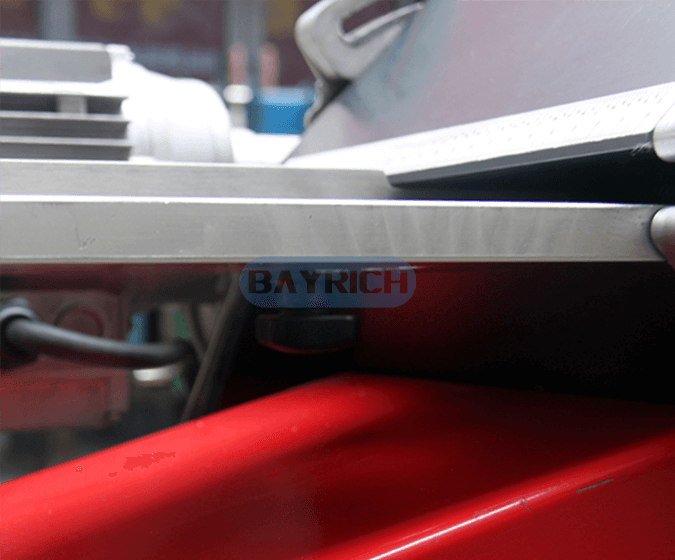
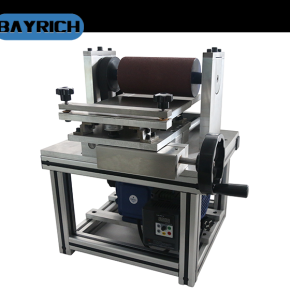
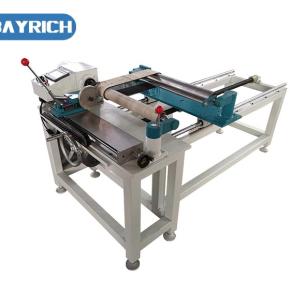
Conveyor Belt Ply Separator
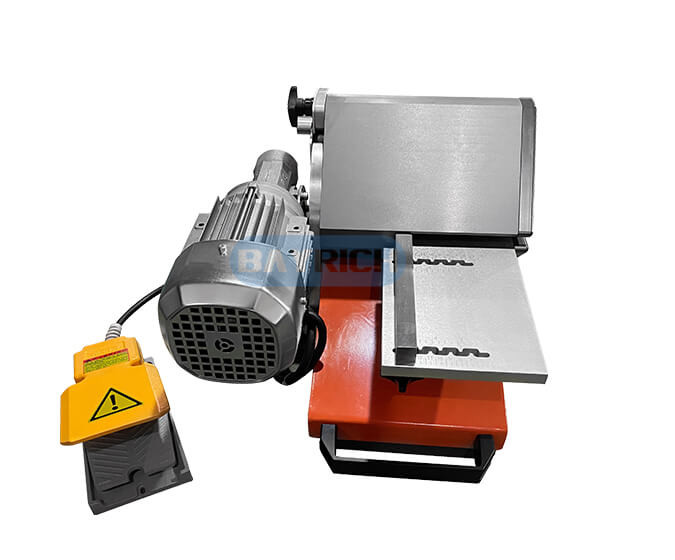
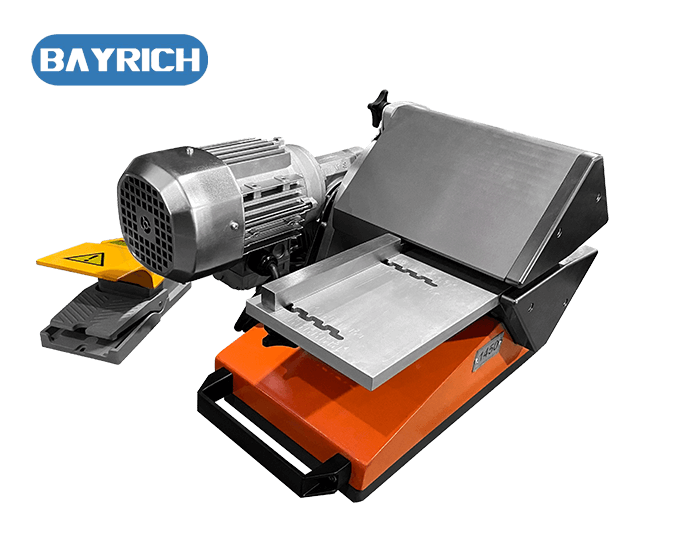
Bayrich belt ply separator used to separate between the plies of a thick conveyor belt — the step a splice press needs before it can close a joint.
Conveyor & Industrial Belt Fabrication Equipment
Conveyor Belt Ply Separator
130 mm (5") in one pass · down to 0.35 mm · bench-top, 370 W
For splice preparation | thin PU belting included | single dial sets the depth | two or three separations per belt
▎Product Overview
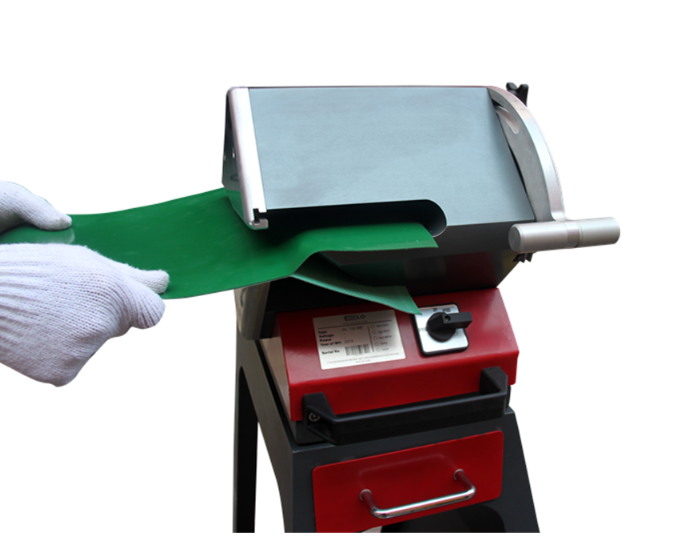
| Used to separate between the plies of a thick conveyor belt — the step a splice press needs before it can close a joint. The plies must be split, buffed and stepped first; get that wrong and no amount of pressure brings the splice back. Its great advantage is splitting as deep as 130 mm (5") in one action, while taking off as little as 0.35 mm (0.014"). That matters on thin belting which is difficult to cut, such as thin PU belts, and it lets the operator make film from the belt for the splice. It may be possible to split between every layer, giving two or three separations from one belt. ● 130 mm in one pass—no repeated scoring along the belt ● Down to 0.35 mm—thin PU belting splits without tearing ● Layer by layer—two or three separations from one belt ● Dial-set depth—the scale sets the thickness, not the hand ● Forward / reverse—back the knife out if the belt jams ● Motor and foot switch—both hands on the belt, foot controls feed |
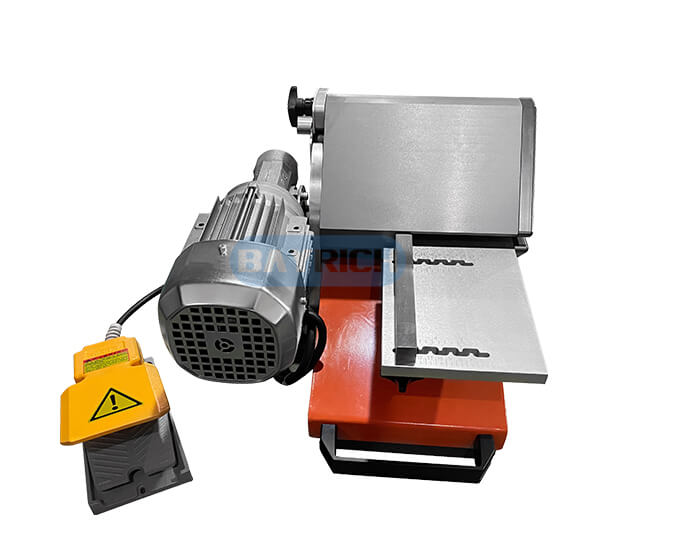
▎Technical Specifications
Item | Specification | Item | Specification |
Model | SC130 * | Max. splitting depth | 130 mm (5") |
Min. split thickness | 0.35 mm (0.014") | Film thickness obtainable | 0.3–0.4 mm |
Belt thickness above cut | 8 mm | Belt thickness below cut | 5 mm |
Max. belt thickness | 10 mm | Voltage | 3-phase 380 V * |
Power | 370 W | Machine size | 520 × 420 × 320 mm |
Net weight | 52 kg | Packing size | 700 × 400 × 420 mm |
Gross weight | 62 kg |
▎Key Features
● One pass—130 mm of separation in a single action | ● Thin belting—down to 0.35 mm, PU included |
● Multi-layer—several separations from one belt | ● Scale control—depth set by dial, repeatable |
● Forward / reverse—back out of a jam | ● Bench-top—52 kg, bolts to the workbench |
▎Applications
● Belts—PVC / PU thermoplastic, thin and thick | ● Splices—finger over finger and stepped splices |
● Film—0.3–0.4 mm sheet taken from the belt for splicing | ● Not suitable—rubber belting (vulcanised) and steel-cord belts |
▎Operating Procedure
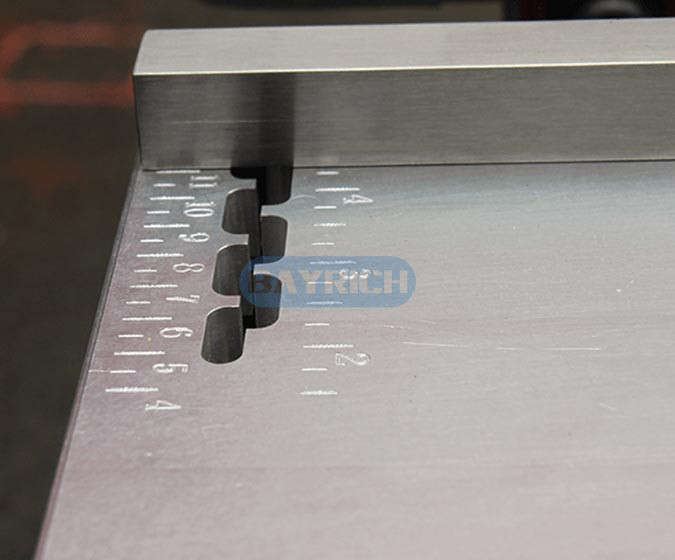
① Mount: bolt the bench version to a firm, level workbench | ② Set depth: rail position up to 130 mm, then the scale for thickness |
③ Start: switch to Forward, the knife runs | ④ Feed: fabric side up, belt edge against the knife, ease it in |
⑤ Split: foot switch for feed, run the full length | ⑥ Release: if it jams, switch to Reverse and back the knife out |
▎Standard Supply and Ordering
Included | Machine, separating knife, foot switch, tools; workshop cart optional (drawer, casters, brake) |
Quoted separately | Spare knives, alternative guides, workshop cart |
When ordering | Belt material and ply count, overall thickness, splice type and depth, site voltage |
Tip: Separation quality depends on three things — a sharp knife, a scale that really sits between the plies, and an even feed. A blunt knife tears the fabric instead of cutting it, and a torn ply halves the splice strength. On PU belting that resists the first pass, split a short section and then continue — do not force it.
* Confirm the model against the drawing (data sheet shows PN130, manual shows SC130). 3-phase 380 V standard, single-phase 220 V on request. Results depend on carcass, ply adhesion, blade sharpness and technique — trial a sample first.
BAYRICH · Conveyor Belting & Machinery · www.baybelting.com · jessie@baybelting.com
Q1. What is a belt ply separator used for?
It separates the fabric plies at the end of a conveyor belt, which is the step before a splice press can close a joint. The plies have to be split, buffed and stepped first — if the separation is wrong, no amount of pressure will bring the splice back.
Q2. How deep can it separate in one pass?
Up to 130 mm (5"). The rail sets the maximum step length, so the full depth a splice needs can be taken in a single pass rather than repeated scoring along the belt.
Q3. What is the thinnest layer it can take off?
As little as 0.35 mm (0.014"). That matters on thin belting which is hard to cut — thin polyurethane belts in particular — and it lets the operator take 0.3–0.4 mm film from the belt itself for use in the splice.
Q4. Can it separate polyurethane belting?
Yes. PVC belts go straight on the table. On PU belting that resists the first pass, we recommend separating a short section first and then continuing — do not force it through.
Q5. Which side of the belt should face up?
PU PVC side up. The scale reads against the face, and with the pu pvc side up a smaller scale setting gives a thinner film.
Q6. What is the difference between a ply separator and a skiver?
A skiver grinds or cuts down the top of the belt to create a step. A ply separator opens the gap between the plies. Different machines, different jobs — and thick pu pvc conveyor belt finger spliced belts need the plies separated, and nylon flat belt need skive the top to make a step splice .
Q7. Can I get more than one separation from a single belt?
Yes. It may be possible to split between every layer, generating two or three separations from one belt — which is what a multi-step stepped splice needs.
Q8. What happens if the belt jams in the machine?
Switch to Reverse. The knife runs backwards and the belt comes out — that is what the reverse switch is for. No need to dismantle anything or cut the belt free.
Q9. What power supply does it need?
3-phase 380 V as standard, 370 W. For export markets a single-phase 220 V version is available on request — worth confirming when you order.
INQUIRY
Categories
LATEST NEWS
CONTACT US
Contact:
Phone: 0086-15669710783
E-mail: echowlq@163.com
Whatsapp:0086-15669710783
Add: 9th Floor, Building 1, No.28, Henghe 3rd Road, Ouhai Economic Development Zone, Wenzhou City, Zhejiang, China.